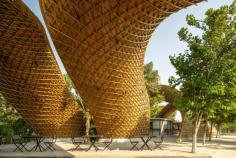
At Ashoka University, The Hungry Caterpillar pavilion, designed by Apoorva Shroff, reimagines campus infrastructure through a 650-square-meter bamboo structure that functions as both shelter and social space. Inspired by the idea of growth and transformation, the pavilion creates a shaded, porous food street beneath existing trees, encouraging informal gathering and movement. Built using lightweight bamboo gridshell canopies and supported by sustainable elements like 3D-printed concrete kitchens and recycled plastic furniture, the project integrates material responsibility with daily student life. Rather than a symbolic gesture, it demonstrates sustainability as a practical, lived experience within an academic setting.

At Ashoka University, The Hungry Caterpillar pavilion, designed by Apoorva Shroff, reimagines campus infrastructure through a 650-square-meter bamboo structure that functions as both shelter and social space. Inspired by the idea of growth and transformation, the pavilion creates a shaded, porous food street beneath existing trees, encouraging informal gathering and movement. Built using lightweight bamboo gridshell canopies and supported by sustainable elements like 3D-printed concrete kitchens and recycled plastic furniture, the project integrates material responsibility with daily student life. Rather than a symbolic gesture, it demonstrates sustainability as a practical, lived experience within an academic setting.

Scroll to Top